23 Oct 2026
Anyone who's dealt with international shipping knows this feeling: your cargo left the origin port days ago, and now you're just... waiting. Refreshing an email. Calling a number that puts you on hold. Hoping someone on the other end actually knows where your container is right now, not where it was three days ago.
Germany makes this especially tricky, and also especially important to get right. It's one of the busiest trade hubs in Europe, ports like Hamburg and Bremerhaven see a staggering amount of container traffic, and a huge share of goods moving through the country are just passing through on their way somewhere else. So when people search for cargo tracking services in Germany, they're usually not asking out of curiosity. They're asking because they've been burned by not knowing, and they don't want to go through that again.
Let's talk about what good tracking looks like, why it matters more here than in a lot of other places, and what separates a provider who's serious about it from one who just says the word "tracking" on their website.
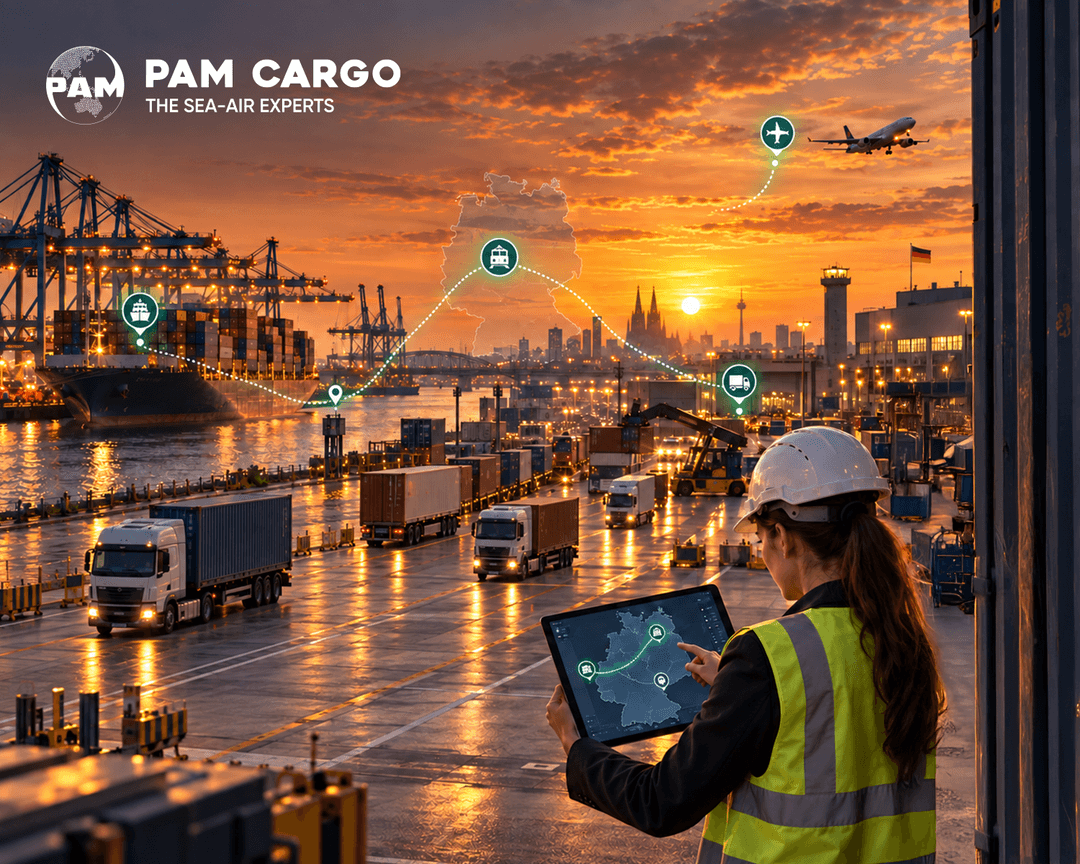
Here’s the thing about Germany: it’s not just a destination; it’s often a transit point too. Cargo comes in, clears customs, gets loaded onto rail or road, and heads off to another country entirely. Every one of those handoffs is a place where things can go sideways. A container gets held for an extra document check. A truck gets delayed at a border crossing. A rail slot gets missed by an hour, and suddenly your delivery window shifts by a full day. Our reliable cargo tracking services in Germany help businesses monitor these movements, catch delays early, and respond before a small disruption becomes a bigger problem.
None of this is unusual. It's just how logistics works when there are multiple moving parts. But it's exactly why cargo tracking services in Germany matter so much because without visibility into each of those handoffs, you're basically flying blind between updates.
Honestly, a lot of companies throw the word "tracking" around pretty loosely. For some, it means you get one email when your shipment clears customs. That's it. For others, it means an actual dashboard you can open any time, showing exactly where things stand.
If you're importing or exporting through Germany, you want the real version the one that tells you:
This is where we'd be lying if we said every provider does this well. A lot don't. At PAM Cargo, tracking isn't something we added on as an afterthought, it's built into how our sea-air and land-air logistics network runs day to day. Ten-plus years in this business and offices in more than 20 countries have taught us one thing pretty clearly: people don't just want their cargo moved; they want to know it's moving.
If you're importing into Germany, you're probably working backward from someone else's deadline: a retailer needs stock, a factory needs parts, a client needs their order. Every day you don't know where your shipment is adds a little more stress to that chain, even if the shipment itself is perfectly fine.
Exporters deal with a flip side of the same problem. Once your goods leave your hands, all you really have is your word and your paperwork to reassure the buyer on the other end. Being able to say "here's exactly where it is right now" instead of "it should be there soon, I think" changes that conversation completely.
And then there's German customs, which, let's be honest, can be thorough to the point of testing your patience. Occasional extra checks happen. When they do, the difference between finding out immediately and finding out three days later (usually from an annoyed customer) comes down to whether your tracking is truly real-time.
If you're comparing providers, a few things separate the ones who take this seriously from the ones who don't:
Real-time updates, not once-a-day check-ins. If your tracking only refreshes overnight, you're already behind.
Tracking that follows your cargo across every mode of transport. Sea to air, land to air, whatever the combination, it shouldn't reset or go dark every time the mode changes.
Honesty when something goes wrong. Delays happen to everyone. The question is whether you hear about it from your provider or from your own frustrated customer.
Actual familiarity with how things work in Germany. Customs quirks, port relationships, the general rhythm of the country's transport network. That kind of experience isn't something you can fake, and it shows up fast when things get complicated.
A provider's track record tends to say a lot here too. Companies that have been doing this for a decade or more, with a real global footprint, have usually already run into every possible complication and figured out how to handle it, which is a very different experience than being someone's first attempt at getting it right.
At the end of the day, cargo tracking isn't really about a dot moving across a map on a screen. It's about not having to wonder. It's the difference between confidently telling your customer "it'll be there Thursday" and quietly hoping that's true.
If you're moving goods in or out of Germany and you're tired of chasing updates instead of just getting them, that's exactly the gap we built PAM Cargo to close. Our sea-air and land-air logistics network runs on fast delivery, competitive pricing, and tracking that actually keeps you in the loop, backed by over 10 years in the business and offices in more than 20 countries worldwide.
AWARDS & RECOGNITIONS
Committed to Excellence, Every Step of the Way


Swiss WorldCargo Best Tonnage Producer 2025
PAM Cargo has been recognized by Swiss WorldCargo as Best Tonnage Producer 2025, acknowledging our strong cargo performance, outstanding tonnage contribution, and continued partnership with Swiss WorldCargo.


