23 Nov 2026
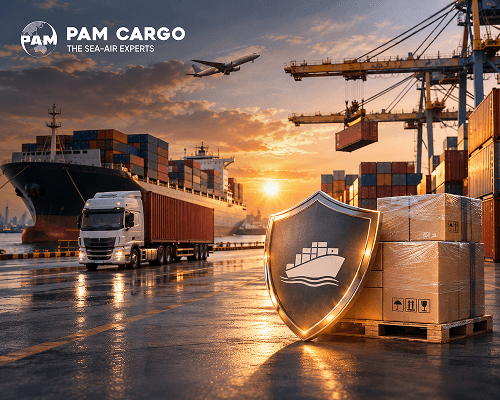
Every shipment is a promise. You promise your customer that their goods will arrive safe and on time. But once the cargo leaves your warehouse, a lot can go wrong. A truck can crash. A container can fall. A storm can delay a ship for days. Even one small mistake can cost a lot of money.
This is where cargo insurance helps. In this post, we explain what cargo insurance is, which risks it covers, and why it matters so much for heavy shipments, especially heavy cargo transportation in Germany.
Cargo insurance is a policy that pays you when your goods are lost, damaged, or stolen while they are on the move. It can cover shipments by sea, air, road, or a mix of these.
Many businesses think the carrier will pay for everything. This is not always true. Carriers usually have a legal limit on what they pay, and that limit is often based on the weight of the goods, not their real value. So if you ship an expensive machine, the carrier may only pay a small part of the loss. Cargo insurance covers this gap.
Shipping looks simple on paper, but cargo goes through many hands and many places. Here are the risks we see most often:
It depends on the policy, so always read the details. There are two common types.
All-risk cover is the wider option. It protects against most causes of loss, except those listed as exclusions.
Named-perils cover only protects against the risks written in the policy, such as fire, collision, or sinking.
Most policies do not cover loss caused by poor packing, delay, or a hidden fault in the goods. That is why good packing and clear documents matter just as much as the policy itself.
Heavy cargo means machines, generators, steel parts, construction equipment, and other large or oversized loads. These goods are expensive and hard to move. They need cranes, special trailers, planned routes, and trained teams. One small mistake during a lift or a turn can cause a very large loss.
Germany is a strong industrial country, with busy motorways, big ports like Hamburg, and strict rules for heavy and oversized loads. For heavy cargo transportation in Germany, you often need special permits and carefully planned routes. Even with the best planning, things can still go wrong, such as an accident, a road closure, or damage during loading. Cargo insurance makes sure one bad day does not hurt your whole business.
How Cargo Insurance Protects Your Business
It protects your cash flow. If a shipment is lost or damaged, the policy helps you recover the cost, so you do not have to pay from your own pocket.
It builds trust with customers. Clients feel safe when they know their goods are covered. Some sales terms, such as CIF, even require the seller to buy insurance.
It reduces stress. You can focus on growing your business instead of worrying about what might happen on the road or at sea.
It keeps your business running. One big loss can stop a small company. Insurance helps you get back on track faster.
At Pam Cargo, we know that every shipment is important to your business. With more than 10 years in the industry and over 20+ offices worldwide, our team plans each move with care, whether by sea-air or land-air. Our tracking system lets you see where your cargo is at every step, so you are never left guessing.
If you are planning heavy Cargo Transportation in Germany, talk to our team. We can help you plan a safe route and understand the right cargo insurance for your shipment.
Shipping will always carry some risk. You cannot stop every storm or accident, but you can protect your business from the cost. Cargo insurance is a small step that gives you big protection. Contact Pam Cargo today to plan your next shipment with confidence.
AWARDS & RECOGNITIONS
Committed to Excellence, Every Step of the Way


Swiss WorldCargo Best Tonnage Producer 2025
PAM Cargo has been recognized by Swiss WorldCargo as Best Tonnage Producer 2025, acknowledging our strong cargo performance, outstanding tonnage contribution, and continued partnership with Swiss WorldCargo.


