29 Oct 2026
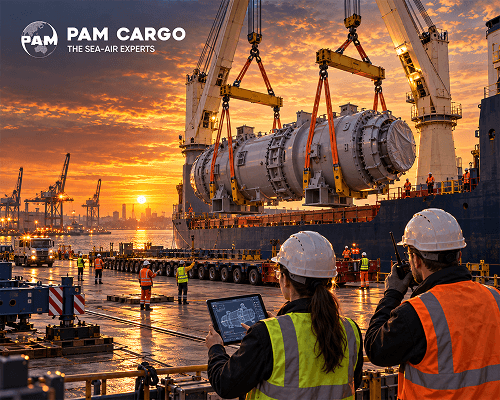
Moving standard freight is usually a predictable process. Heavy and oversized cargo is different. Industrial machinery, power-generation equipment, construction components, production lines and other out-of-gauge loads cannot simply be placed in a regular container and shipped through a conventional network.
These shipments demand careful engineering, precise coordination and a logistics plan built around the cargo itself. That is why businesses rely on specialists in project cargo handling in Germany to manage every stage safely, legally and efficiently.
Project cargo can include individual heavy units or multiple shipments connected to a larger industrial project. The cargo may exceed standard limits for weight, height, width or length. It may also be fragile, unusually shaped or too valuable to expose to unnecessary handling.
Unlike ordinary freight, there is rarely a one-size-fits-all solution. Every movement must be planned according to the cargo dimensions, lifting points, centre of gravity, transport route, delivery schedule and final site conditions.
A small planning error can lead to delays, equipment damage, safety risks or unexpected costs. Expert management reduces these risks before the cargo begins its journey.
Successful project cargo movements begin long before loading. Specialists first study the cargo specifications, origin, destination and site accessibility. They then develop a transport plan covering lifting, loading, securing, routing, storage and final delivery.
This early planning helps identify potential challenges such as restricted roads, low bridges, narrow access points, limited turning space or weight-restricted infrastructure. It also ensures that the correct vehicles, cranes and handling teams are available at each stage.
For businesses arranging heavy Cargo Transportation in Germany, this preparation is especially important. Germany has highly developed transport infrastructure, but oversized loads must still move within strict operational and regulatory requirements.
The shortest route is not always suitable for heavy cargo. An oversized shipment may require an alternative path because of bridge clearances, road widths, overhead cables, tunnels, roadworks or local traffic restrictions.
Project cargo experts conduct route surveys to verify whether the planned journey is physically possible. Depending on the shipment, this may include checking:
These checks help prevent a vehicle from reaching an obstacle that cannot be safely passed. They also allow the logistics provider to plan escorts, traffic management and alternative routes in advance.
Heavy and oversized loads often require special transport permits. The exact requirements depend on the cargo dimensions, total vehicle weight, route and regions involved.
Managing permit applications can become complex, particularly when a shipment crosses several jurisdictions or connects international sea, air, rail and road movements. Experienced project cargo teams understand the documentation process and coordinate with the relevant authorities, carriers and local partners.
This expertise supports compliance and reduces the risk of delays caused by incomplete documents, unsuitable travel times or unapproved routes.
Project cargo cannot always be handled with standard forklifts and trailers. Depending on the load, the operation may require mobile cranes, heavy-duty lifting systems, low-bed trailers, modular transporters, flat racks, open-top containers or customised supports.
The correct equipment must be selected according to the cargo's weight distribution, lifting points and centre of gravity. A professional team also prepares lifting and lashing plans to keep the shipment stable throughout the journey.
Safe handling is particularly important during transitions between transport modes. Each transfer from vessel to terminal, terminal to trailer, or trailer to installation site introduces risk. Expert supervision keeps these operations controlled and coordinated.
Heavy cargo may travel through several transport modes before reaching its destination. A single project can involve ocean freight, inland waterways, rail and road transportation.
Each stage must connect smoothly with the next. Vessel schedules, terminal capacity, lifting equipment, permits, vehicles and site teams all need to be aligned. If one part is delayed, the entire project timeline can be affected.
An experienced project cargo provider acts as a central point of coordination. This gives the customer clearer communication, better shipment visibility and faster decision-making when conditions change.
High-value project cargo leaves little room for error. Weather, port congestion, road closures, equipment availability or site delays can disrupt even a carefully planned movement.
Expert teams assess these risks early and prepare practical alternatives. This can include backup routes, additional equipment, temporary storage, revised delivery windows or contingency handling arrangements.
Cargo insurance, method statements, safety procedures and regular progress updates also form part of a responsible project cargo strategy. The aim is not only to respond to problems, but to anticipate and control them.
Delivering oversized cargo is not complete when the shipment arrives near the destination. Industrial plants, construction sites and energy projects may have strict access windows, limited manoeuvring space or ongoing operations that cannot be interrupted.
Final-mile delivery therefore requires close coordination with site managers and installation teams. Vehicles, cranes and personnel must arrive in the correct sequence so the cargo can be unloaded safely and without unnecessary waiting.
For time-critical projects, this level of coordination can help protect construction milestones and reduce expensive downtime.
Germany is a major European centre for manufacturing, engineering, automotive production and industrial trade. Its ports, roads, railways and inland waterways offer strong connections, but moving exceptional loads through this network requires local operational knowledge.
PAM Cargo has experience in Project Cargo Handling in Germany and can combine international freight expertise with an understanding of local routes, infrastructure, regulations and handling resources. This is particularly valuable for cargo entering through German ports or moving between production facilities and project sites across Europe.
Heavy and oversized shipments require more than transportation. They require engineering insight, regulatory knowledge, specialised equipment and continuous coordination from origin to final delivery.
With the right PAM Cargo partner, businesses can reduce risk, maintain control over complex movements and keep critical projects on schedule. Whether the requirement involves a single machine or a complete industrial facility, expert planning makes heavy cargo transportation in Germany safer, smoother and more reliable.
Planning a heavy or oversized shipment? Contact our PAM Cargo team to discuss a tailored transport solution for your next move.
AWARDS & RECOGNITIONS
Committed to Excellence, Every Step of the Way


Swiss WorldCargo Best Tonnage Producer 2025
PAM Cargo has been recognized by Swiss WorldCargo as Best Tonnage Producer 2025, acknowledging our strong cargo performance, outstanding tonnage contribution, and continued partnership with Swiss WorldCargo.


